Reading St Paul's Cathedral through objects
Hope Turnbull and Joanne Edwards explore the often-overlooked labour of the women who made, crafted, and shaped some of the Cathedral's most remarkable objects.
1. Opus Criminale
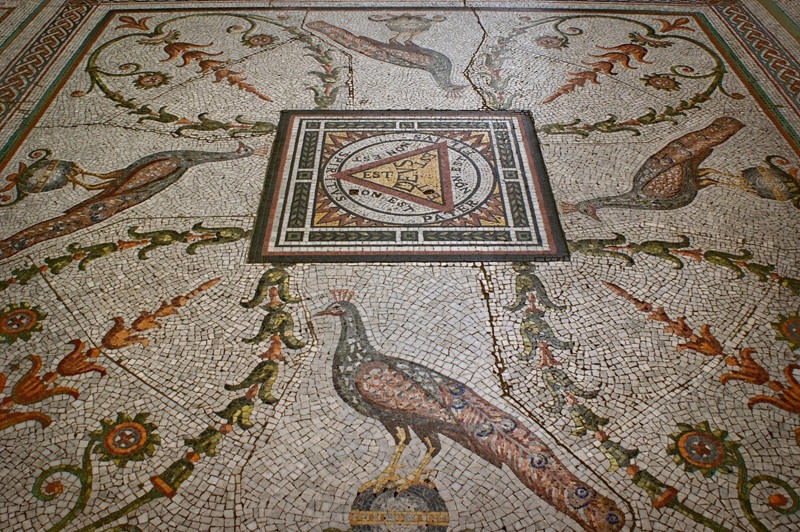
Whilst the Crypt of St Paul’s Cathedral is home to the tombs of many influential historical figures, fascinating stories of ordinary people can be found just below our feet. Surrounding the tombs of Nelson and Wellington, a vast mosaic stretches across the Crypt floor, covering thousands of square feet. Designed by the Surveyor of the Fabric, Francis Penrose (1817-1903), it was produced between 1860 and 1890 by women prisoners of Woking and Fulham Prisons. Fashioned from offcuts of marble, the work became known as opus criminale, or ‘criminal work’.
The scheme reflected a distinctly Victorian belief that purposeful labour had the ability to reform. It was rooted in a strand of penal thinking that valued productive, skilled labour, distinct from the punitive hard labour of the treadwheel or crank. Working in prisoner workshops, women chipped discarded marble into tesserae, assembled it into patterned blocks, and polished it by hand, before it was delivered as finished panels for installation.
Viewed closely, however, the mosaics become more than decoration; they form an archive of individual lives, labour and craft. According to Heike Zech, ‘different degrees of imperfection, and impatience, as well as dedication can be discerned when comparing individual panels’ (Mosaics of St Paul's Cathedral, 2015). The mosaics reveal the varying levels of skill which each woman possessed. Finely detailed peacocks are found in the intersection between Nelson and Wellington, with intricate shading that gives the birds real volume and depth. Creating such detailed mosaics required exceptional skill, combining careful craft(wo)manship with the ability to bring a complex design into a coherent whole.
When viewed as the product of individual skill and labour, the mosaics invite a broader question: are they any less of a monument than the tombs that surround them? Whilst their names have disappeared from record, their work remains embedded in the fabric of the building, leaving traces of individual women within what might otherwise seem an anonymous object. The mosaics are a different type of monument: not large effigies of military heroes, but testaments in stone to the often-under-examined labour of ordinary women.
2. Framing the sacred
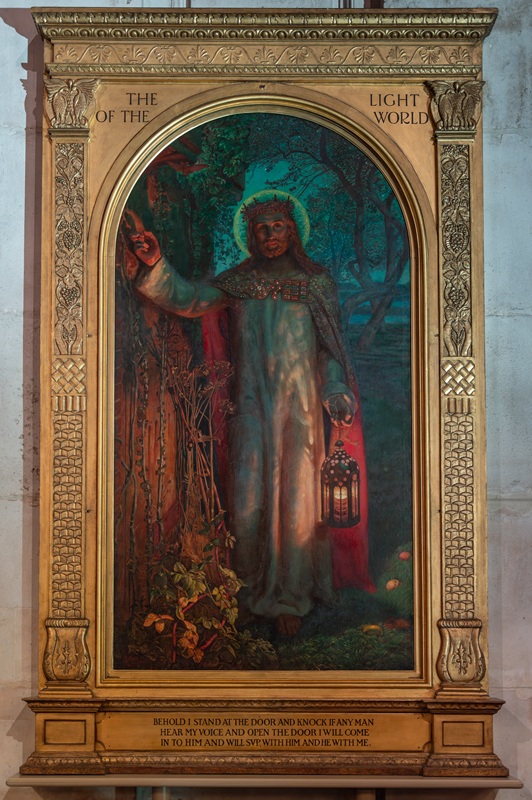
Most visitors to St Paul’s will be familiar with William Holman Hunt’s The Light of the World (c.1900-1904), a pre-Raphaelite oil painting depicting Christ in an apple orchard, lantern in hand, knocking at an ivy-covered door. The painting is surrounded by an elaborate gilded frame inspired by the Italian Renaissance. Although art historians have often treated frames as secondary to the images they contain, they can act as an extension of a painting’s subject matter, both complimenting and enriching its meaning.
For Hunt, the frame formed an essential part of the artwork itself. Although designed by the artist, the frame was crafted by Hilda Hewlett and an anonymous collaborator, ‘Miss Smith’. Working from sketches produced by an ageing Hunt, whose eyesight was failing, Hewlett noted that although ‘Holman-Hunt knew what he wanted,’ his designs were often ‘too vague for words: no… not for words, but for carving’, suggesting that much was left to her own interpretation and skill.
The significance of this contribution becomes apparent in the frame’s design. Its carved columns and sweeping arch form an aedicule - an architectural structure traditionally used to house altars, relics, and devotional objects. Aedicules did not simply contain an object, they elevated it, working together with the object to signal its importance. The frame thus shapes the painting's religious message, encouraging viewers to approach the painting as an object of devotion and contemplation. Meaning is therefore communicated not only through Hunt's brushwork, but also through wood, gesso, gold leaf and carving. In this light, the popular description of Hunt’s work as a ‘sermon with a frame’ feels somewhat reductive.
To separate the painting from its frame is to overlook part of what gives the work its devotional power. Yet this separation happens surprisingly often. Online art repositories frequently reproduce Hunt’s image without its frame, encouraging viewers to focus solely on the painted canvas. In doing so, they risk obscuring Hewlett and Smith’s contribution. If the frame guides viewers to encounter The Light of the World as a devotional object, then their contributions cannot be separated from its sacred power. Their role was not simply to craft an object through which viewers encounter Hunt’s painting, but to participate in shaping the devotional experience it continues to inspire.
3. Widow, founder, coppersmith
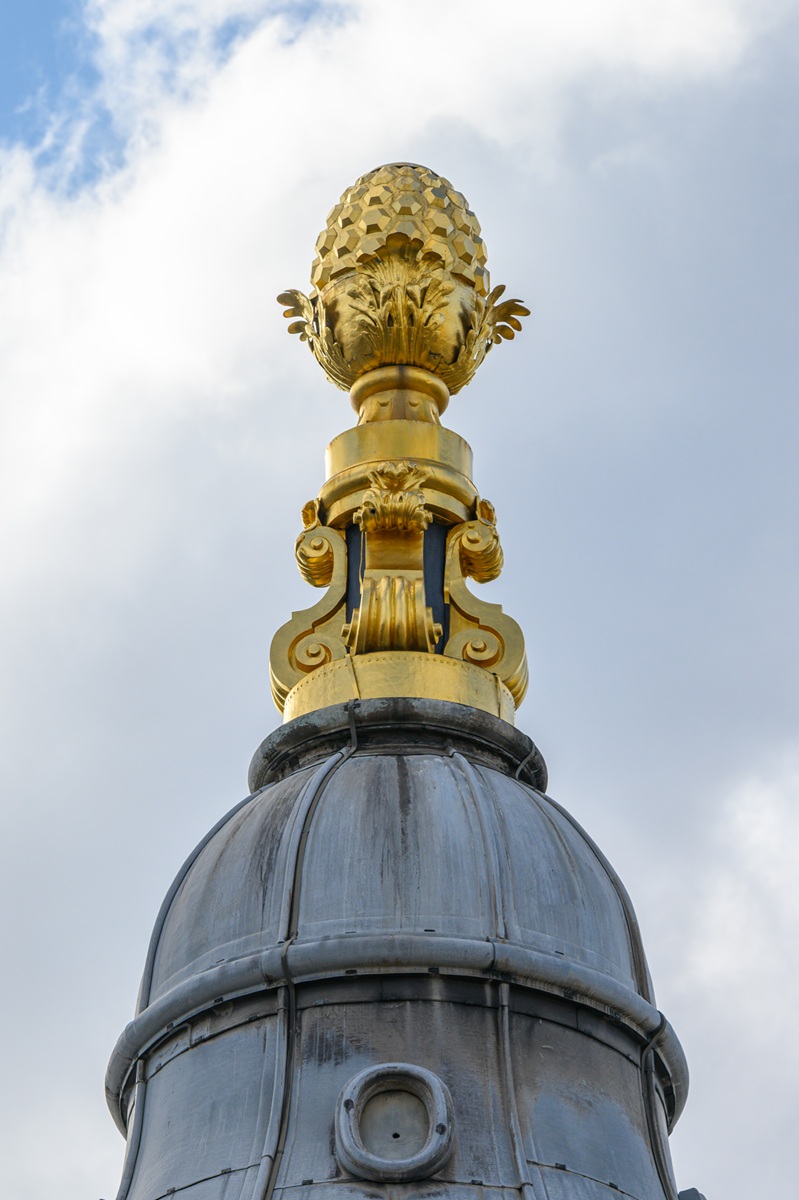
Looking up past the carved stone, pediments, and columns of St Paul’s, your attention may be drawn to two gilded pineapples atop the Cathedral’s towers. What may appear an unusual architectural choice today was, in fact, a powerful symbol of wealth and status in the early modern period. Imported from the Caribbean and South America, pineapples were among the most desirable luxury goods of the seventeenth and eighteenth centuries, their rarity signalling access to global trade networks and the expanding commercial world of empire.
The person responsible for casting and finishing the pineapple above the southwest tower was Jane Brewer, one of the few women named in the records of the Cathedral's construction. Recorded in the Wren Society accounts as a ‘widow, founder and coppersmith’, Brewer received £354 1s in November 1707 for the creation of the pineapple, the equivalent of around £38,000 in today's money. Yet Brewer's contribution extended far beyond the pineapple itself. The accounts also record her supplying brass door fittings, locks, candlesticks, and, perhaps most intriguingly, a water engine in 1710.
Brewer's appearance in the records is striking. Was she an unusual exception, or does her presence hint at the wider, often unrecorded role women played in London's skilled trades? At a time when guild culture largely imagined skilled craft production as male work, formal training and memberships were typically inaccessible for women. Whilst women frequently contributed to family businesses and workshops, their labour was often recorded under the names of fathers, husbands, and masters. Findmypast estimates that the contributions of 68 million women over a 150-year period may be obscured in historical records, where marital status was often recorded more readily than occupation. Widowhood, however, offered one of the few recognised routes through which women could continue operating workshops and businesses after the death of a husband.
The significance of Brewer lies not in the pineapple itself, but in what it reveals about women’s work in early modern London. Recorded as a founder and coppersmith, she stands as a reminder of women’s participation in London's skilled trades. Her survival in the records challenges us to think not only about the women we can identify, but also about those whose contributions remain hidden behind workshops, businesses, and family names.
4. Stitching worship
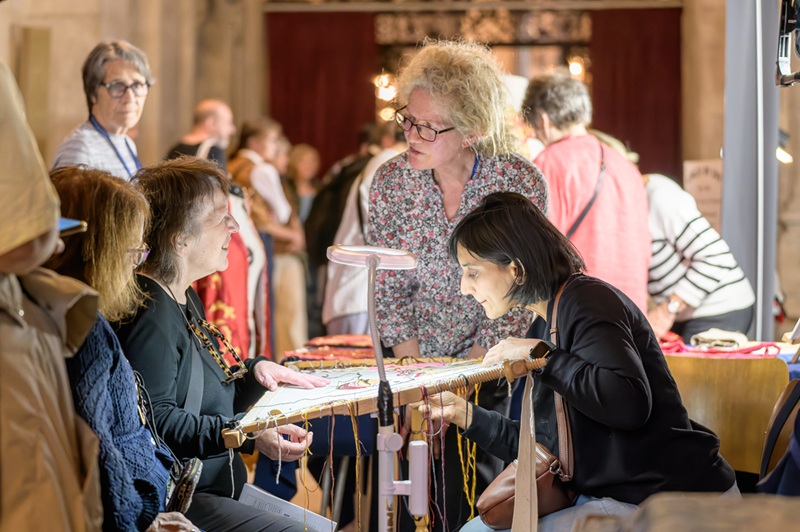
Broderers demonstrate the embroidery techniques used to create, repair, and maintain the ceremonial vestments worn in Cathedral services at our recent Cathedral at Night event.
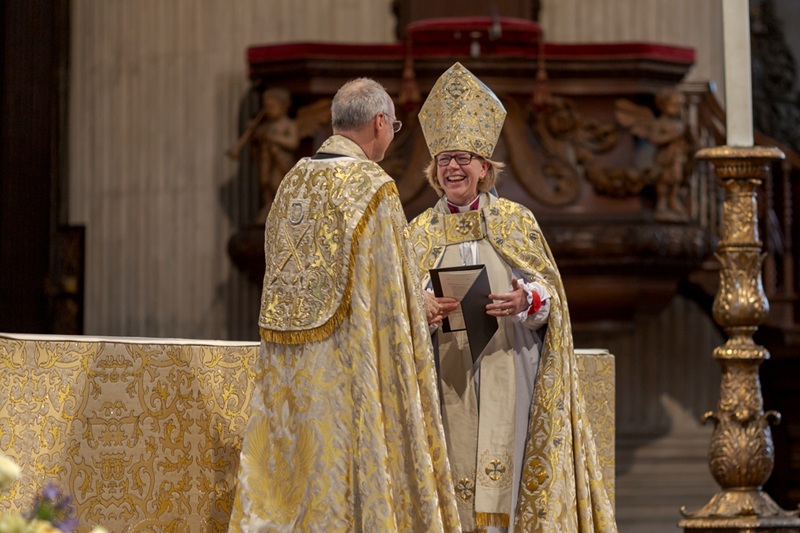
Dame Sarah Mullally (now Archbishop of Canterbury), wearing the Enthronement Cope during her Installation as Bishop of London in 2018.
Throughout St Paul's Cathedral, textiles play an important role in shaping the experience of worship. A white cope, currently on display in the Crypt, offers one such example. Designed and embroidered by Judy Hardy for the consecration of the first female Bishop of London, it was worn by Sarah Mullally as she assumed the role in 2018. Woven from silk brocade and embroidered with metallic thread, it belongs to a long tradition of ceremonial vestments which shape the visual language of Christian worship.
Behind many of these textiles stands the work of the Broderers of St Paul's. An earlier form of broiderer, meaning embroiderer, their name reflects a craft tradition long associated with the making and care of ecclesiastical textiles. Established in 2006 to create a new set of vestments for the Cathedral's 300th anniversary, the group continues to make, repair, and conserve the textile collection from a workshop high within the Bell Tower. Alongside new commissions, they care for historic vestments that continue to be worn, ensuring that both the objects and traditions they embody remain part of the Cathedral's worshipping life.
But what would worship at St Paul’s look like without such textiles? The liturgy would remain the same, yet much of the visual language through which it is experienced would disappear. Vestments help mark the rhythms of the church year and distinguish moments of celebration from liturgy. The significance of these textiles therefore lies not only in their craft or history, but in their continued use. Unlike a painting or monument, a cope fulfils its purpose only when it is worn. As clergy move through the Cathedral, these embroidered garments become part of the liturgy itself, giving visible form to worship. The Broderers' work therefore helps sustain not only the textiles themselves, but also the visual and ceremonial life of the Cathedral.
Yet few visitors are aware of the labour taking place high within the Bell Tower. Their contribution extends beyond the creation and conservation of individual objects. By ensuring that these vestments remain part of Cathedral life, their care and devotion help sustain traditions that continue to shape worship today. If textiles give visible form to the Cathedral's ceremonies and traditions, then the people who make and care for them are part of the story those objects tell.
About the author
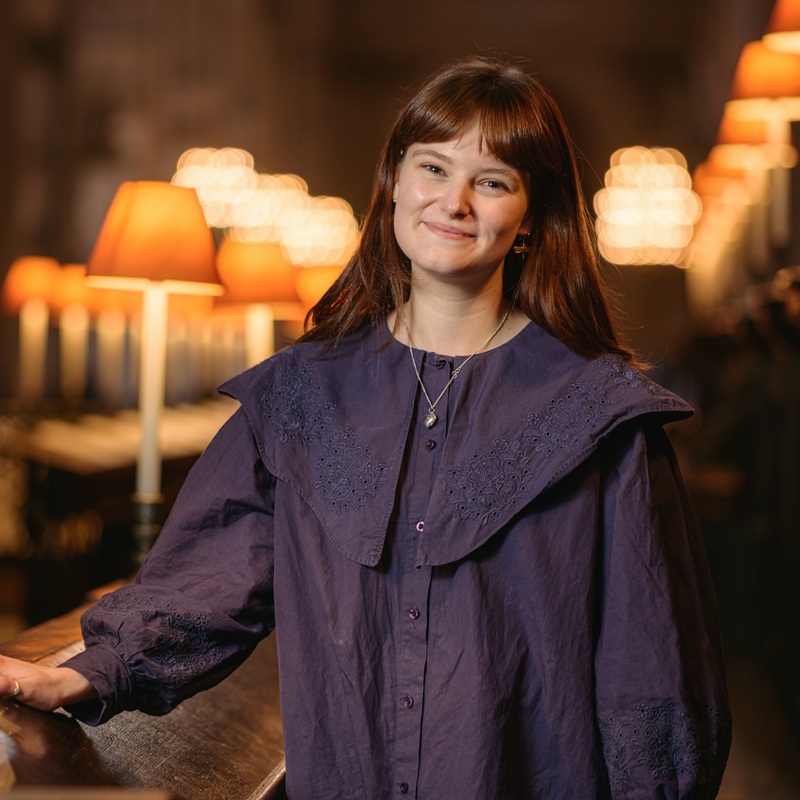
Hope Turnbull is Heritage Learning Officer at St Paul's Cathedral Institute, developing creative, accessible learning programmes that connect audiences with the Cathedral's heritage. Her previous roles at the City & Guilds of London Art School and Imperial War Museum shaped her commitment to inclusive arts and heritage learning.
About the author
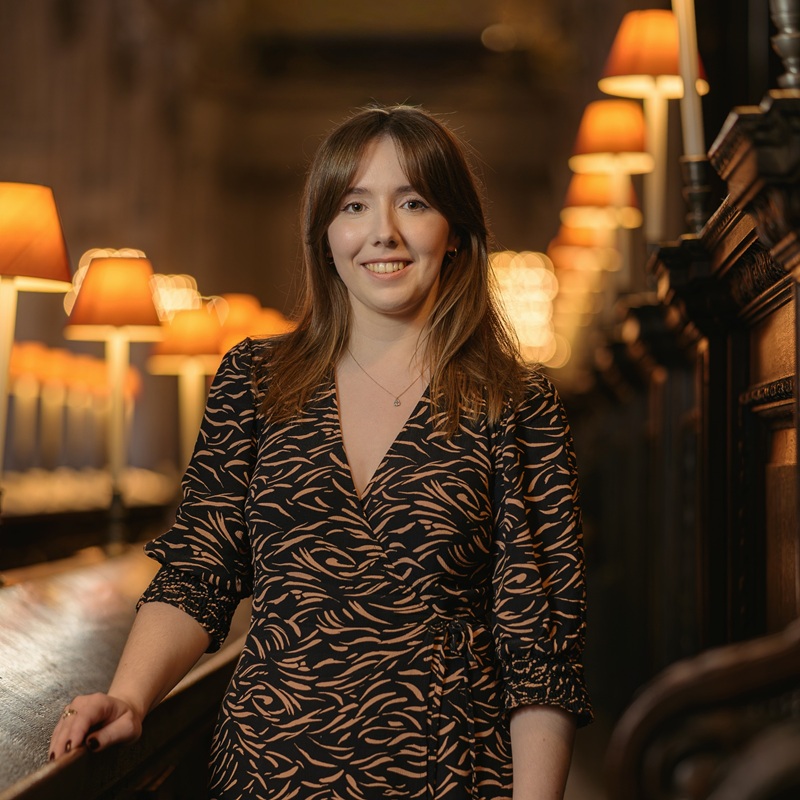
Dr Joanne Edwards is the Events and Digital Support Assistant for St Paul's Cathedral Institute, where she supports the delivery of the Cathedral's learning programmes. She received her doctorate in collaboration with the National Trust, specialising in the recovery and interpretation of women's histories.