Alleluia songs
Patrick Craig explores the music of Easter to Trinity, via Ascension and Pentecost.
1. Easter
Through this month of May we shall be exploring the music of this breathless period in the Church’s year from Easter to Trinity via Ascension and Pentecost.
Benjamin Britten died fifty years ago. His death made the front pages of the papers - surprising even then - one of my earliest memories. I had the privilege of conducting his spellbinding anthem Rejoice in the Lamb in St Paul’s Cathedral a fortnight after Easter. It’s a setting of Christopher Smart’s poem Jubilate Agno - a joyful exploration of God’s 'magnifical and mighty' creation - animals, instruments, the lot - written from his mental asylum in Bethnal Green c.1760. Every time I perform this piece new insights pop up from both the text and the music. This time it was the repeated whispered Alleluias that spoke of the rumours of Christ’s Resurrection to be found within the glories of the world we live in.
The day after this performance I sang at the Memorial Service for Jane Goodall, a clarion voice of wisdom who called humanity to a deeper relationship with our closest relatives - the chimpanzees - and not only with them but with all living beings on God’s Earth. We heard about a dream she’d had as a teenager which she described to the Dean of Washington Cathedral just twelve days before she died aged 91. In the dream she was pushing through angry crowds who were shouting in a language she didn’t understand. Once she fought her way through she saw Jesus on the cross who spoke directly to her. “I don’t remember what he said,” she remarked, “but what I am doing now is an answer to some sort of plea.” What followed over the next seventy years was a life devoted to our precious planet and all the creatures therein. We sang Easter Alleluias for Jane too. Her shared vision with Christopher Smart of God’s whole creation united in mutual care will live on in resurrection hope long after her death.
2. Ascension
Ascension music is full of trumpets and triumphant Alleluias but there is a poignant element in the Ascension story that is about separation and loss.
The first Ascension anthem I got to know as a young chorister was Peter Philips’ Ascendit Deus - a joyful interpretation of that day Jesus’ feet disappeared into the clouds. It uses upward vocal leaps and dizzying waltzing Alleluias to tell the story.
It was much later that I found out about the sacrifices Philips made in order to stay loyal to the Catholic faith he had learned as a chorister here at St Paul’s Cathedral at a time when England was a Protestant country. His choirmaster Sebastian Westcott oversaw an extraordinary period in the history of St Paul’s Choir when the Choristers became the Children of Paul’s after Evensong and would mutate into an acting troupe performing plays to the great and the good across the Capital, including Queen Elizabeth herself. Westcott was imprisoned as a recusant by the Bishop of London in November 1577, but was released three months later by Elizabeth who had missed his Children of Paul’s Christmas plays so much that she forgave his Catholic leanings. Philips lodged with Westcott after he left the Cathedral Choir that same year, but ended up pursuing his composing career abroad - using the money left him in Westcott’s will to travel extensively across Europe, finding work in Brussels, Antwerp and Rome.
That separation from all that he held dear in London in order to stay true to his faith follows in the footsteps of the disciples who were separated from Jesus for the second time on Ascension Day. They were left to figure out how to found a Church on their own, bereft of their risen leader. This Thursday I shall be thankful for the sacrifices of both those first disciples and Peter Philips as they struggled to stay true to their Jesus.
3. Sunday after Ascension
It’s always a wake up call when two angels appear together in the Bible. We had two in dazzling clothes at the empty tomb on Easter morning. We’ll not mention the two it took to destroy Sodom and Gomorrah. At Evensong on the Sunday after Ascension you can guarantee you’ll hear in St Paul’s my favourite modern choral banger - Patrick Gowers’ Viri Galilei featuring two angel tenor and bass soloists.
This is the most thrilling piece to sing. Scored for at least eighteen individual voice parts and an organ duet (yes - two players sharing the same stool!), it’s the musical equivalent of a rollercoaster ride. The slow climb to the top is a series of distant Alleluias that remind us that Christ is risen and out there, led by a lone trumpeter in the front seat. God is gone up with a merry noise, and the Lord with the sound of the trumpet. Then we tell the wonderful story of the disciples getting an education from two angels as to what on earth (and in heaven!) is going on! Why stand ye gazing up into heaven? Finally, via an organ glissando, Jesus rides into heaven on his chariot and we get a thrilling musical interpretation of angels on wheels using one of those great Victorian hymns to power themselves skywards. Riding on the clouds his chariot To his heavenly palace gate.
The piece was written for the consecration of Richard Harries as Bishop of Oxford on Ascension Day 1987 in St Paul’s Cathedral. This inspiring and generous man of God died recently. Both he and the composer Patrick Gowers would have been ninety this month. Two big-brained angels peering down from heaven, encouraging us to see that at the Ascension, Jesus is released from the bounds of time and space, and is finally able to shower his love on all of us. If you find yourself gazing up to heaven, wondering where God is, know that he has already found you.
4. Pentecost
Of the thousand concerts I sang with The Tallis Scholars a decent proportion of them began with Thomas Tallis’s Pentecost masterpiece Loquebantur variis linguis. It’s a genius piece which tells the Pentecost story of the Holy Spirit’s power to enable the disciples to speak in languages that everyone could understand.
After the religious authorities accuse the disciples of being drunk Peter quotes the Old Testament I will pour out my spirit … your young men shall see visions, and your old men shall dream dreams. Thomas Tallis lived into his eighties so was writing masterpieces early on in his career, as well as the brilliant works he published in the first ever printed book of British sacred music Cantiones Sacrae in 1575, towards the end of his life.
Loquebantur is in seven parts (a magic number in the Bible and for choral works of this period) and vigorously explores this sound world of multiple voices all singing independently but rooted in the chant of the Spirit which underpins the whole thing in the tenor part. The effect is energising and reminds us of the Spirit’s power to reignite our faith. It ends this fifty-day period of Easter with thrice-repeated Alleluias. This is the same composer who wrote a forty (!) part masterpiece Spem in alium. He knows how to handle complexity and, like on the day of Pentecost, still allow us to hear the music in a language we understand.
I’m so grateful to live in a multicultural city where I hear a variety of languages every day. The church I grew up in has shed its inward-looking priorities, and now preaches a God who loves us all. In St Paul’s we hear the Bible read in a different language every Sunday morning. Thanks be for the visions and dreams of musicians like Tallis who teach us to hear God in a multitude of voices.
5. Trinity
So we’ve journeyed through the Church’s great feasts in May with a series of Alleluia Songs. Travelling through the miracle of Easter, the drama of Ascension and the gifts of Pentecost, we now arrive at Trinity Sunday.
n St Paul’s we honour the achievements of one of the Cathedral’s greatest cheerleaders - John Stainer. Stainer revived the fortunes of the music in the Cathedral in the nineteenth century. He had the chutzpah to chop Grindling Gibbons’ organ case in two in order to open up the view from one end of the building to the other. He also expanded the size of the choir to fill the newly increased acoustic. We are now following in his footsteps by doubling our music education provision and opening the choir up to girl choristers.
His Trinity Sunday anthem I saw the Lord uses a thrilling text from Isaiah and gives it a St Paul’s sized makeover. We have heaven full of angels with six wings, the posts of the door shifting and the room filling with smoke. The newly split organ and the double sided choir bring the drama.
My favourite part of this Isaiah text is actually the next bit. Who shall I send? Send me. Amidst all the chaos of this heavenly setting that lone voice steps up to carry the message of God. We all have the opportunity to do this in our own way. Whether your calling is great or small we can all sing our own Alleluia Song and be the change we wish to see in the world.
About the author
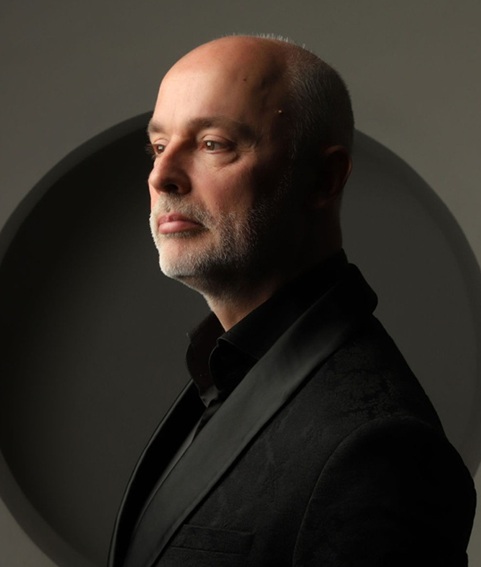
Patrick Craig is a professional singer who is a long-standing member of St Paul's Cathedral Choir and The Cardinall's Musick, and who recently completed a thousand concerts with The Tallis Scholars. He is also the Founder-Director of the all-female professional choir Aurora Nova who sing regularly at St Paul's Cathedral.