‘To see thee more clearly, day by day.'
Maggi Dawn guides us through the season of Lent.
1. Stones into bread
The tempter said to Jesus, ‘If you are the Son of God, command these stones to become bread.’ But he answered, ‘It is written, “One does not live by bread alone, but by every word that comes from the mouth of God.”’ (Matthew 4:1–4)
Throughout the scriptures, ’40 days’ symbolises a time of preparation and transformation. During his 40-day fast in the wilderness, Jesus faced the temptations that come to anyone involved in ministry or public service. The fact he was tempted shows that he was truly human – not just God in a human costume, but real flesh and blood. It hurt when he got a splinter, he knew what it was like to grieve for a friend, and when his friends let him down it was as devastating for him as it is for you and me. And this first temptation concerned the basic physical need for food. His reply to that temptation, ‘One does not live by bread alone’ is a reminder that we are physical beings, but also more than merely physical.
Christian belief continues to claim that life has meaning and purpose that extend beyond the purely physical and material, but at the same time, we cannot transcend our humanity. We are not spirits clothed inconveniently in bodies; we are bodily creatures. The early Christians rejected as heresy the idea that the spirit was superior to, and separate from, the body. Jesus, through His incarnation, demonstrates the wholeness and unity of human existence.
Jesus, in a moment of extreme hunger, refused to use his spiritual power to overcome his physical being. And, in a culture that is both overindulgent and excessively body-conscious, perhaps we too need to learn that body, soul, mind, and spirit are not meant to be put in competition with each other, but lovingly and respectfully held together. Our spiritual journey includes learning to be comfortable in our own skin.
2. 'You feed them.'
This weekend is the fourth Sunday in Lent. This was traditionally celebrated as ‘Refreshment Sunday’. In the medieval world, all fasting was temporarily suspended, the streets came to life with mid-Lent fairs, as the Church celebrated the anniversary of one of the most famous feasts ever: the feeding of the 5,000.
Huge crowds followed Jesus into the wilderness and as the day wore on, they grew more hungry and tired by the hour. You can imagine the disciples’ anxiety; along with their concern for the needs of thousands of hungry people, they must also have been aware they could have a crowd-control problem on their hands. So they turned to Jesus, doubtless hoping he would come up with an appropriate miracle. This was the man who had turned water into wine: surely a picnic in the desert wasn’t beyond him! But intriguingly, his reply was, ‘You feed them. You give them something to eat.’
Often in retelling this story we focus on how Jesus saved the day by blessing and multiplying the food – how he did perform the miracle they were hoping for! But pause for a moment and consider this detail: His message to the disciples – 'you feed them' – seems to draw them into the knowledge that they were not there merely to observe His ministry, but actively to become a part of it.
Teresa of Ávila famously wrote, ‘Christ has no body now but yours. No hands, no feet on earth but yours. Yours are the eyes through which he looks compassion on this world. Yours are the feet with which he walks to do good. Yours are the hands through which he blesses all the world.’ So, whenever we are concerned with the needs of the world, let’s remember Jesus’ words: ‘You feed them.’ All we have to do is make a start: that’s when the miracles start to happen.
3. 'You shall see my back.'
The Lord said to Moses, ‘See, there is a place by me where you shall stand on the rock; and while my glory passes by I will put you in a cleft of the rock . . . and you shall see my back; but my face shall not be seen.’ Exodus 33:12–23
The book of Exodus tells us that God spoke to Moses as a person speaks to a friend. And yet, curiously, the longer Moses lives, and the closer he gets to God, the more it seems that he doesn’t really know God at all. Moses yearned to see God as he really is – face to face. But, in various biblical accounts, we see that even to catch a glimpse of God’s glory was overwhelming – John fell down in a faint (Rev 1:17); Zechariah was rendered completely speechless (Luke 1:22). God made it clear to Moses that, faced with the full revelation of God, a mortal being could not survive the impact – so, by declining Moses’ request, God was saying that Moses’ life was not over yet. But was it any consolation to see God’s back?
Gregory of Nyssa, in his 4th century book The Life of Moses, recalls Moses’ early encounter with God at the burning bush where, in the blazing light, he heard God’s voice audibly. But as Moses followed God through the desert, he was increasingly in a cloud, until at last he finds himself on the mountain top, seeing nothing but God’s retreating back.
Gregory, however, takes this not to be a retreat from God’s presence, but a maturing into the knowledge of God. He writes, ‘as the soul makes progress… so much the more does it see that the divine nature is invisible.’ Gregory points out that the more we perceive of God as he is, the more we realise he is beyond human understanding. It seems a little unfair, perhaps, to say that the closer we get to God, the less clearly we see him. But invisibility is not the same as absence. Direct encounters with God may elude us, but we can recognise, retrospectively, when we have been in the presence of the holy. A seeming miracle of human kindness, an act of unbounded generosity, an impulse for self-giving, or a vision of profound beauty – as moments like these pass us by, we realise we have been in the presence of holiness.
To stand in a blaze of light and hear God’s voice is a rarity. Mostly we see the traces of God’s glory in the shadow of his presence as he passes by.
4. A king on a donkey
The great crowd . . . took branches of palm trees and went out to meet Jesus, shouting, ‘Hosanna! Blessed is the one who comes in the name of the Lord—the King of Israel!’ Jesus found a young donkey and sat on it; as it is written: ‘Look, your king is coming, sitting on a donkey’s colt!’ John 12: 12-15
A few weeks ago I set out to walk along the north bank of the Thames, and suddenly found myself swept into a huge crowd of people who were walking the annual ‘walking marathon’. I fell into conversation a woman who said that she loved taking part because it was ‘like a marathon for ordinary people’ – no fanfare, no cameras, no trophies, no personal bests, just hundreds of people joining in on a walk with a purpose. It was a stark contrast with the level of importance and publicity given to the Olympics, or the London Marathon.
The contrast between the first Palm Sunday, and a typical triumphal procession in the ancient world was equally stark. A king processing through the streets, or making a triumphant entry into an arena, would ride a magnificent horse -- probably a white stallion – among a great deal of pomp and circumstance, carefully designed to enhance the King’s image, and to gain public support. But the evidence suggests that the first Palm Sunday was much more like a ‘walking marathon’ – not a unique event to showcase Jesus, but an annual pilgrimage that ordinary people took part in.
All the way through the gospels, Jesus turned people’s expectations upside down. They expected a saviour to be sombre and serious, with an ascetic lifestyle like John the Baptist – but Jesus dined out and turned water into wine. They hoped for a Messiah who would overthrow the Roman occupation; what they got was a man who told them to put down their weapons. And here, once again, he confounded expectations. Instead of a grand showcase, he slipped into an annual event with ordinary people; instead of a magnificent white stallion, he rode on a donkey.
The disciples had repeatedly heard Jesus make oblique references to suffering, death, and resurrection. Perhaps they were beginning to add together the symbolism of kings on horses with the prophecy concerning a peaceable Messiah riding a donkey’s colt (Zechariah 9:9). And perhaps, among the cries of ‘Hosanna’, the recognition of his true identity was growing by the hour.
Even so, I imagine that they still did not foresee what was coming next. They did not expect to see a Messiah on a cross, any more than they expected to see a king on a donkey.
About the author
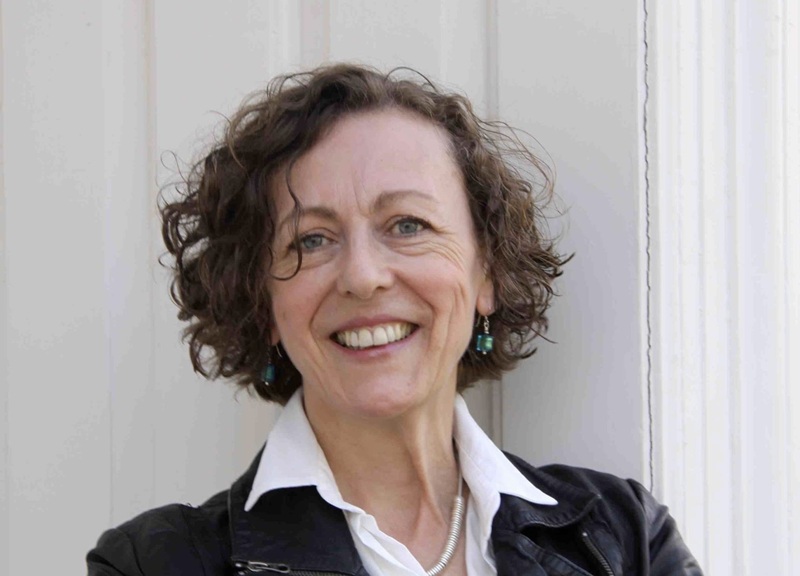
The Rev’d Professor Maggi Dawn is a priest in the Episcopal Church (USA) and a professor of theology, having taught at Cambridge and Durham in the UK, and Yale University in the USA. She is the author of five books, including Giving It Up, a series of daily readings from Ash Wednesday to Easter Sunday.