The Organs
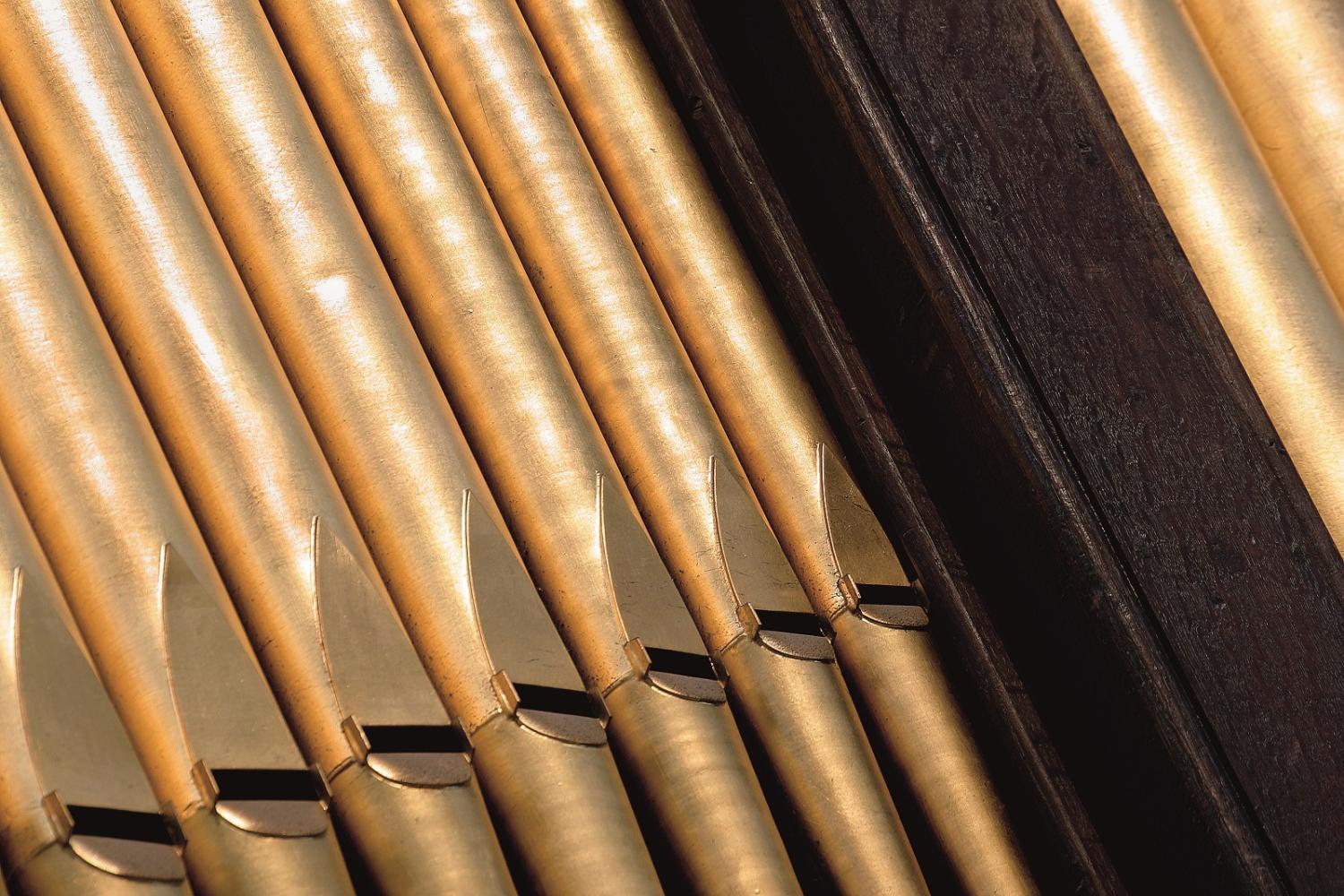
St Paul’s Cathedral was built on an epic scale and with absolute attention to detail. These are qualities deeply embodied in its Grand
Organ.
In 1694 a contract was signed with eminent German organ builder, Bernard Smith, to supply an organ for the new Cathedral. The 27-stop,
three-manual, no-pedal instrument was placed on a screen in the quire.
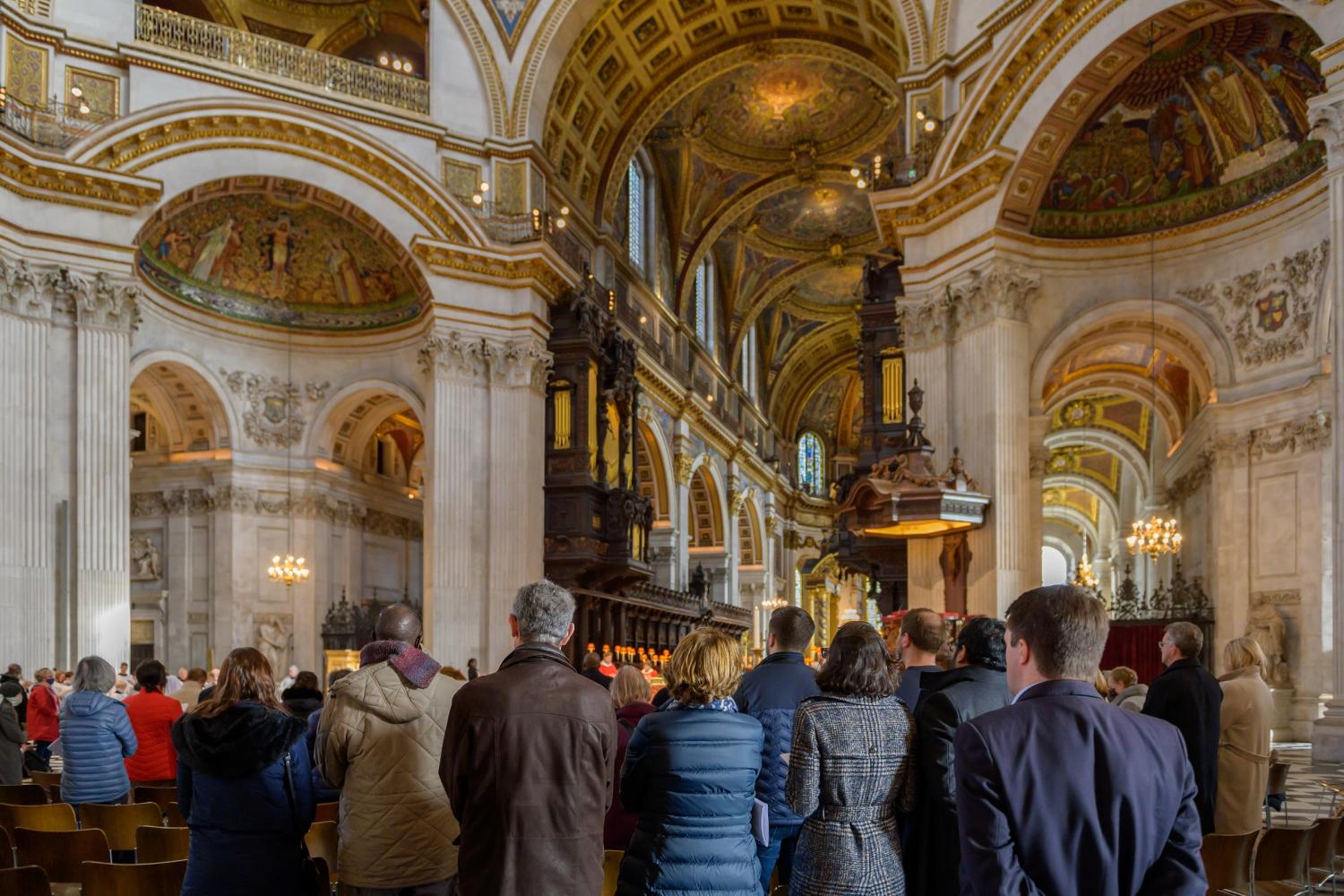
The organ remained relatively unaltered until, in the 1870s, Henry ‘Father’ Willis completed an essentially new instrument. The original Wren
case was boldly divided in half and placed against the pillars on either side of the quire. At considerable risk to his own reputation, Willis
had constructed something of a musical and visual coup de théatre in one of the most important ecclesiastical buildings in the world.
Further alterations and reconstructions have been made by Henry Willis III (1930s), N P Mander Ltd (1970s) and Mander Organs Ltd (2000s).
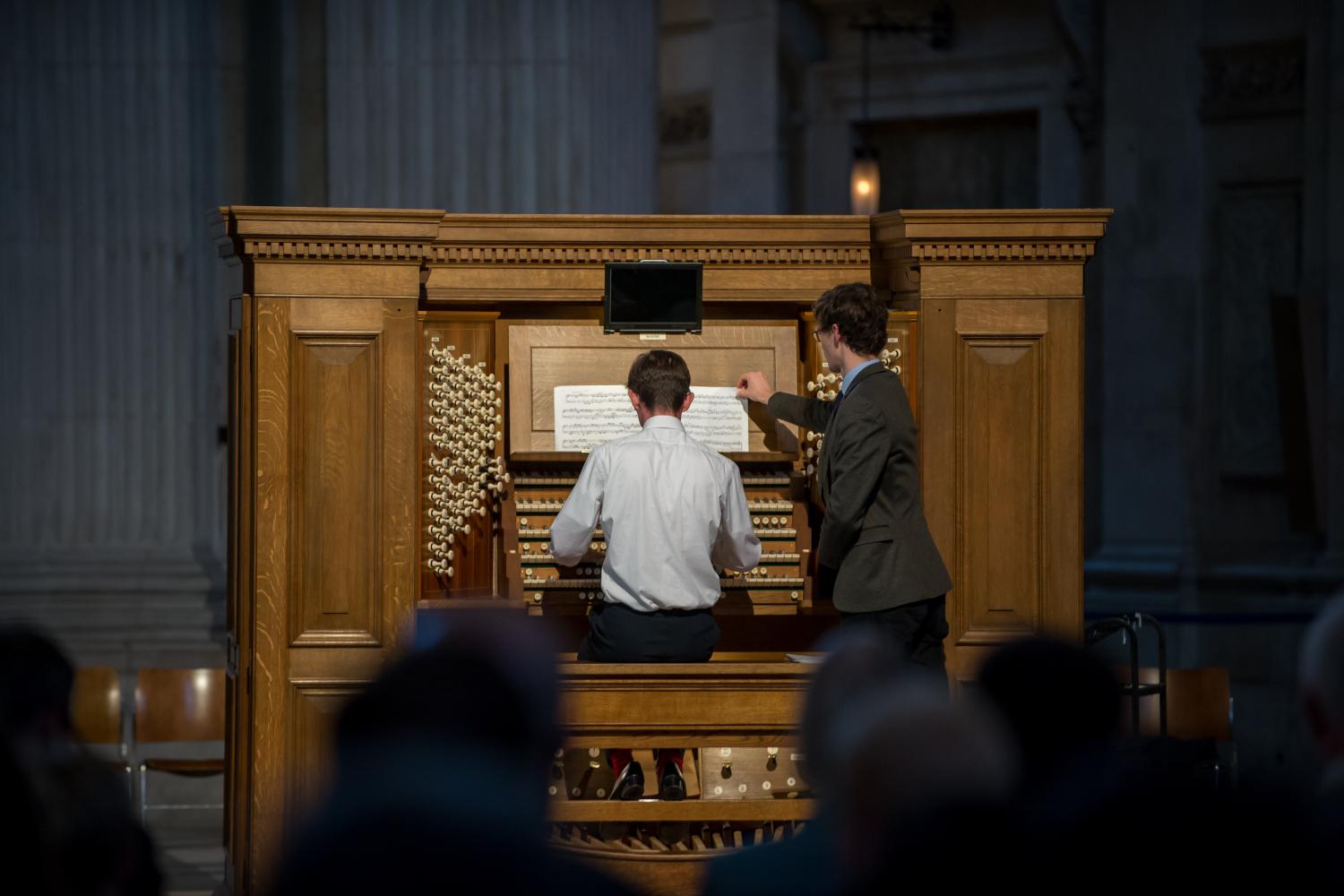
A second, mobile console has also been provided. The two consoles are identical - each of 137 drawstops and 140 controls. The operating system
needed to make this set-up work utilises the same technology as the NASA space shuttle programme and the International Space Station.
But what of the instrument’s ability to make music? Like the building in which it finds itself, the organ is capable of the big and the small
and finds a unity in its very diversity. Former St Paul's Organist, John Scott, describes the Grand Organ as having a “chameleon-like
character”, but above all else, it is capable of making the most incredible music.
The Cathedral has three other organs, the 'Willis on Wheels', Continuo 'Chamber' Organ and OBE Chapel Organ. Organ specifications.
VISITING ORGANIST INFORMATION
The Bells
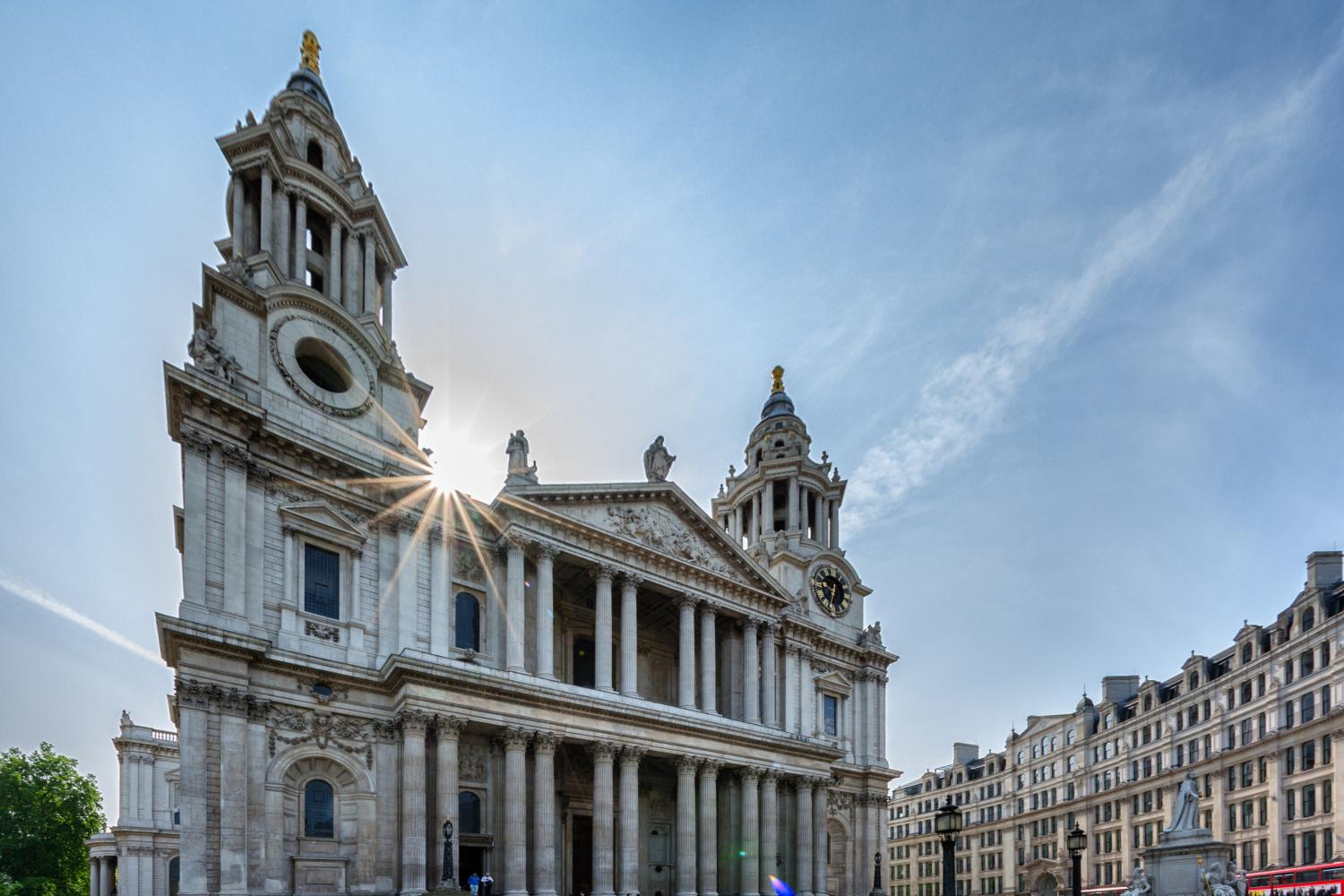
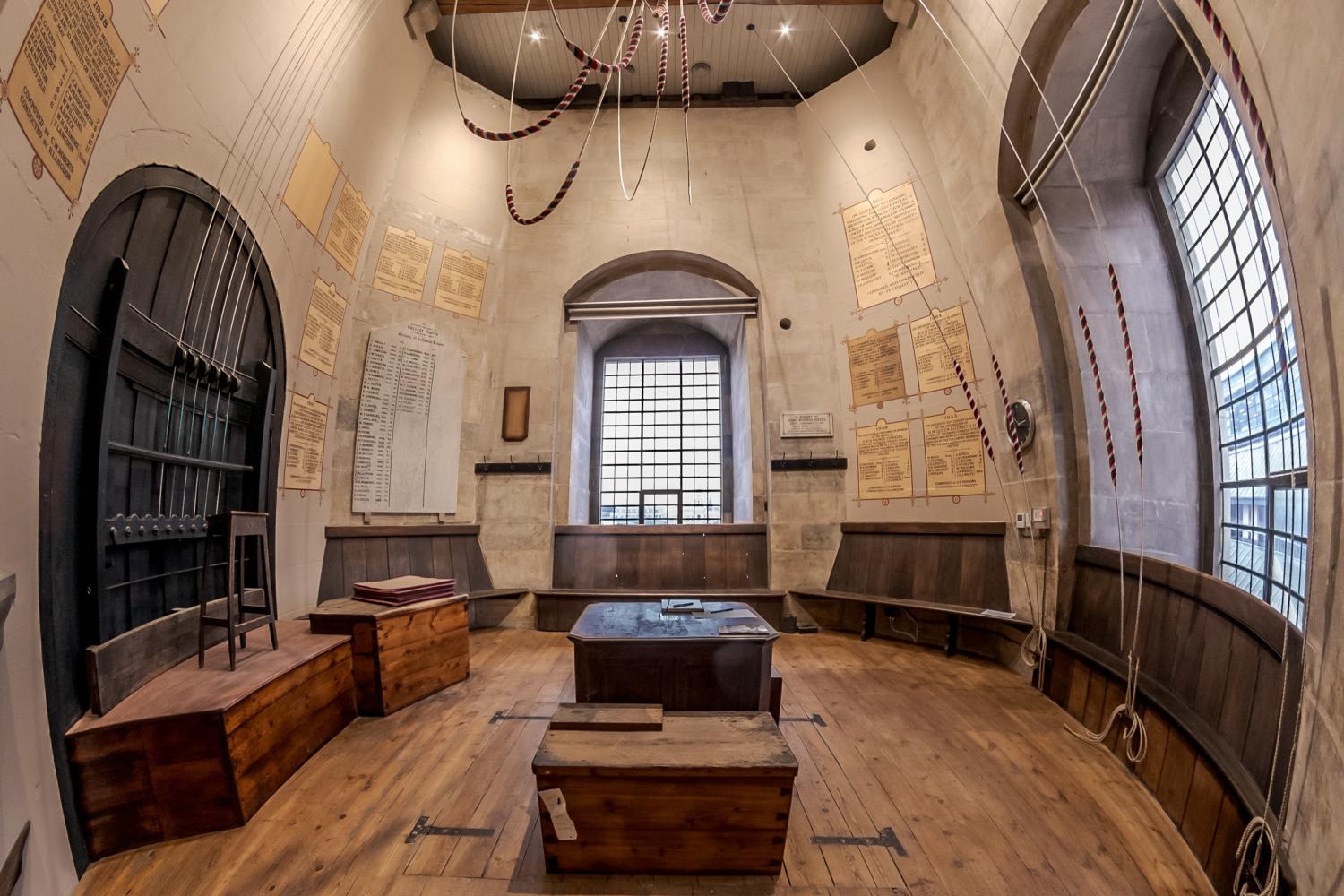
Cast in 1878, the 12 change ringing bells which hang in the north west tower of St Paul's form the second largest ring of bells in the
world.
Change ringing requires both physical and mental ability and it takes most ringers several years to become sufficiently skilled to ring on the
challenging bells of St Paul's. Each bell is given a number, from 1 - 12, and a change is a sequence of these numbers where each bell
rings once. The order or sequence is changed and each bell rings again. The smallest 'treble' bell weighs just over eight
hundredweights, while the largest 'tenor' bell weighs over three tons (61 cwt). The St Paul's ring is in the key of B flat.
|
Ringing times
|
|
Sunday
|
9.45 - 10.15am | 11 - 11.30am | 2.40 - 3.15pm
|
Also in the north west tower is the original service bell - 'The Banger' - which is still rung the 8am Eucharist.
Great Paul and the Clock Bells
The south west tower houses Great Paul, the largest bell ever cast in the British Isles, which weighs 16½ tons. Sadly, Great Paul has
not sounded for several years because of a broken chiming mechanism.
There are also three clock bells. The largest, Great Tom weighs over 5 tons, and as well as striking the hours, is
tolled on the death of senior members of the Royal Family, the Archbishop of Canterbury, the Bishop of London, the Dean of St Paul's or the
Lord Mayor of London.